

If you are planning an extension, a loft conversion or structural work near a wall you share with a neighbour, or near their boundary, the Party Wall etc. Act 1996 probably applies. In practice that means you must give your neighbours formal written notice before the work starts, usually two months ahead. It is not planning permission, and it is not something to dread: it is a legal process that protects both you and your neighbour, and handled properly it keeps the whole job civil.
This guide explains what the Party Wall Act is, when it applies, what you actually have to do, what your neighbour can and cannot do about it, and why getting it right early matters far more than most people realise. The Act applies in England and Wales; the detail below is the general picture, and the official government guidance covers the specifics.
What is the Party Wall Act?
The Party Wall etc. Act 1996 is a law that governs building work affecting shared walls, shared structures and the ground near a neighbour's property. Its job is to let you carry out reasonable work to your own home while protecting your neighbour from damage, and giving both of you a clear, fair process if anything goes wrong.
Two things it is helpful to understand up front.
It is separate from planning permission and building regulations. You can need all three, or just one, and they are dealt with independently. Getting planning permission does not deal with the party wall side, and vice versa.
And it is not about asking permission. As we will see, your neighbour cannot simply refuse to let you do reasonable work. The Act is a process for doing the work properly and resolving any dispute, not a veto your neighbour holds over your plans.
When does the Party Wall Act apply?
There are three main types of work that bring the Act into play, and the third surprises people because it does not involve a shared wall at all.
1. Work on an existing party wall or structure. Cutting into it (for example to insert a steel beam), raising it, underpinning it, removing a chimney breast from it, or otherwise altering a wall you share with a neighbour.
2. Building a new wall on or at the boundary line between your property and your neighbour's.
3. Excavating near your neighbour's building. Digging foundations within three metres of a neighbouring building and to a greater depth than its own foundations, or within six metres under a certain angle. This one catches people out, because you can trigger the Act by the depth of your foundations even when you are not touching any shared wall.
If your project involves any of these, the Act applies and notice must be served. A great many extensions involve at least one of them.
What actually counts as a party wall
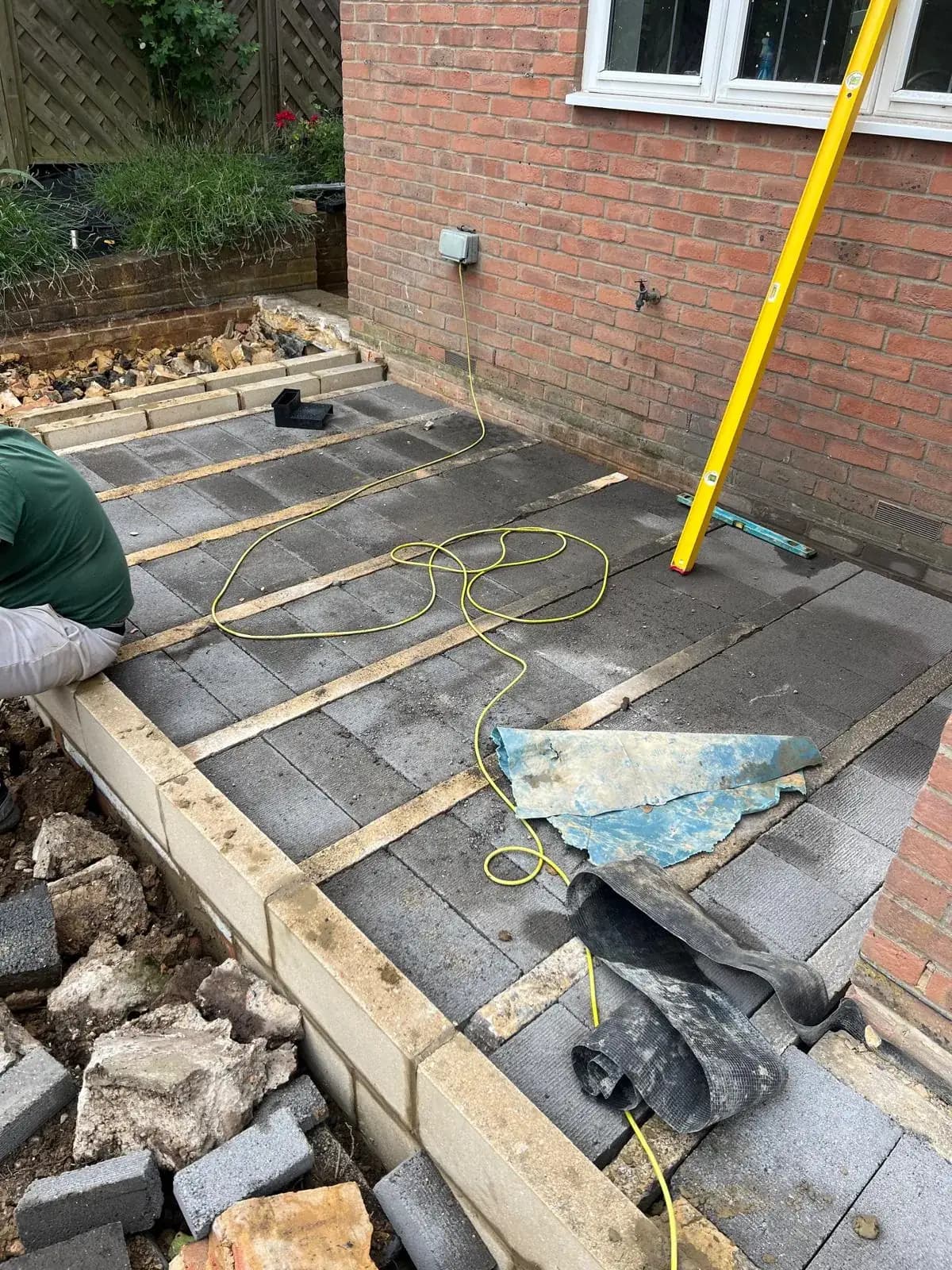
The term is broader than people assume. A party wall is not only the obvious one, the wall down the middle of a semi or between terraced houses that you literally share. It also includes a wall that stands on the boundary line between two properties even if only one owner uses it, and, in flats, the floors and ceilings between dwellings can be party structures too.
So "I don't share a wall" is not the end of the question. A garden wall on the boundary, a wall built up to the line, and the ground near a neighbour's foundations can all bring the Act into play. The safe approach is to assume it might apply to any work near a boundary or a neighbour's building, and check.
Serving notice: what you have to do, and when
If the Act applies, you (the "building owner", the person doing the work) must serve written notice on the affected neighbour (the "adjoining owner") before work starts. The notice period depends on the work:
Work on a party wall or structure: at least two months' notice before work begins.
Building a new wall at the boundary, or excavation near a neighbour's foundations: at least one month's notice.
The notice sets out who you are, what you propose to do, and when you intend to start. For excavation work it usually needs to include plans showing the depth of the proposed foundations. Getting the notice right, and serving it on the correct owners (including landlords where a property is let), matters, because a defective notice can invalidate the process and cost you time.
Because of the two-month period, the party wall notice often quietly becomes the thing that sets your earliest possible start date, which is why it is worth dealing with early rather than as an afterthought.
What your neighbour can do: consent or dissent
Once served, your neighbour has 14 days to respond, and there are essentially two outcomes.
They consent. They agree in writing, and you can proceed (subject to your other approvals). This is the simplest and most common outcome where relations are good, which is exactly why the informal conversation beforehand matters so much.
They dissent, or do not respond. If they object, or simply do not reply within 14 days, the Act treats the matter as being "in dispute". That sounds alarming but is routine: it does not mean the work is stopped, it means the formal surveyor process kicks in to agree how the work will be done safely.
The key point, and the great reassurance, is that dissent does not give your neighbour a veto. They cannot stop reasonable work to your own property. What they can do is require that it is done under the protection of the Act's formal process.
If they dissent: surveyors and the party wall award
Where the matter is "in dispute", the Act is resolved through party wall surveyors. There are two ways it can go:
One agreed surveyor. Both owners agree to use a single, independent surveyor who acts impartially for both. This is the cheaper, simpler route.
Two surveyors. Each owner appoints their own surveyor, and the two work together (with a third selected to settle any deadlock).
The surveyor or surveyors then produce a party wall award (sometimes called a party wall agreement): a document setting out exactly how and when the work will be carried out, the protections for the neighbouring property, and access arrangements. It almost always includes a schedule of condition, a record, usually with photographs, of the state of the neighbour's property before work starts.
On costs, the building owner, the person doing the work and benefiting from it, usually pays the surveyors' fees, since it is their project that made the process necessary.
The extension jobs that trigger it
In practical terms, these are the common projects where the Act comes up:
Side return and rear extensions built up to or near a boundary, very common on terraced and semi-detached houses.
Excavating foundations near a neighbour's property, which can trigger the Act on depth alone even away from a shared wall.
Loft conversions that involve inserting steel beams into the party wall, or building a dormer up to it.
Underpinning a party wall.
Removing a chimney breast that is part of a party wall.
If your project is a side return on a terrace, in particular, you can assume the Act is very likely to apply, because you are typically building up to a boundary and digging foundations beside a neighbour's wall.
Getting it right, and keeping your neighbours on side
The single most important thing about the party wall process is not legal, it is human. The families either side of you live a wall away, and your build is going to be noisy and dusty for weeks or months. How you handle the party wall stage sets the tone for the whole job.
The mistake people make is letting a formal legal notice land on the neighbour's mat with no warning. A solicitor-style letter arriving out of the blue is exactly what turns a neighbour who would happily have consented into one who digs in, appoints a surveyor and makes the whole thing slower and costlier.
The right approach is simple: talk to your neighbours first, in person, explain what you are planning and roughly when, and then serve the notice as the formal follow-up to a conversation they were expecting. Most disputes under the Act are really failures of communication, not genuine objections. Serve properly, keep the schedule of condition, and keep talking, and the process is smooth.
How the party wall process is handled
The party wall side is one more thing to get right, on the correct timescales and served on the correct people, alongside the planning, the building regulations and the build itself, and it is easy to let it slip until it delays your start.
This is where we come in, gently. We design and build extensions, and managing the party wall process, working out whether the Act applies, getting the notices served on the right owners at the right time, and sequencing the work around it, is part of how we run a job, so it does not become the thing that holds up your start date. Where a neighbour dissents and a surveyor and award are needed, that is a straightforward, well-trodden process we build into the programme. You get one team keeping the planning, the building regs, the party wall side and the build all moving together. Most of our work comes through recommendation, which depends on jobs running smoothly, neighbours included.
Planning an extension near a boundary or shared wall? Book a free, no-obligation site visit on 07920 731533 and we will tell you whether the Party Wall Act applies, handle the notices and timing, and keep the whole job on track. No pressure, and no obligation to proceed.
Useful next steps
Keep reading
Written by
Jason Berry
Director of J.Berry Extensions & Conversions. Every J.Berry project — extension or loft conversion — is personally surveyed, quoted and run by Jason Berry, from first site visit to handover.